
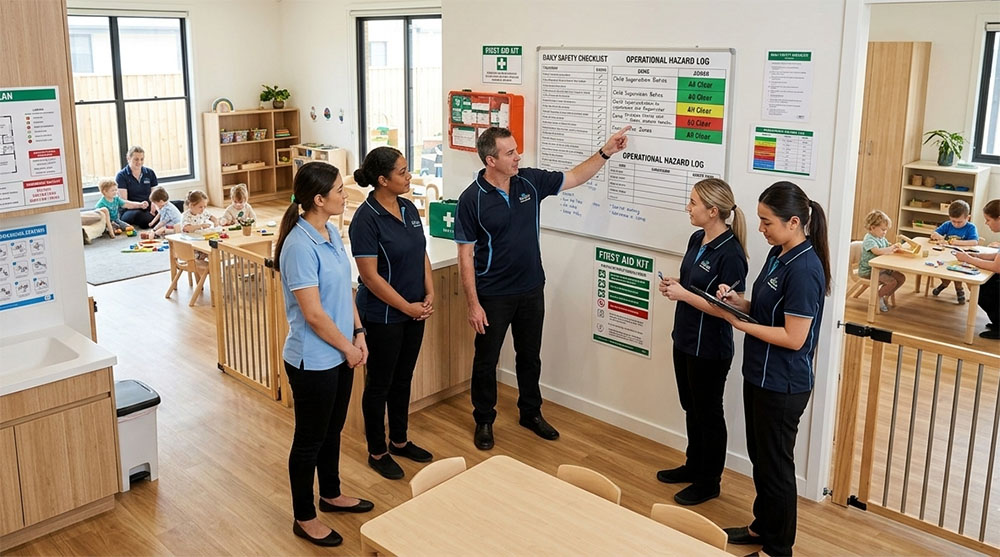
Child Safety Is Not a Policy
It is a set of daily behaviours that are reinforced or corrected in real time.
What Strong Child Safety Culture Looks Like
- Educators challenge unsafe practice immediately
- Concerns are escalated early, not minimised
- Supervision expectations are explicit
- Incidents are reviewed for learning, not blame
- Leaders are visible and present in rooms
Signs of Weak Culture
- “They didn’t mean it” language
- Incidents explained away as oneoffs
- Lack of followup after nearmisses
- Inconsistent responses across rooms
What Leaders Must Do
- Model calm, decisive responses to risk
- Set clear nonnegotiables
- Coach behaviour, not attitudes
- Treat child safety as operational discipline
Key Insight:
Children are safest in services where accountability is normal — not uncomfortable.
Child safety improves when leaders normalise accountability.
Rymen Academy delivers Child Safety Culture sessions that focus on what leaders and educators actually do — not what policies say.
Training covers:
- Realtime responses to risk
- Speaking up and intervening appropriately
- Leadership behaviours that set the tone
Available for:
- Wholeteam training days
- Leadership and Educational Leader sessions
- Refresher webinars across multiple services
Strong culture is built through practice, consistency and leadership presence.